Buy reviewing.com ?
We are moving the project
reviewing.com .
Are you interested in purchasing the domain
reviewing.com ?
domain@kv-gmbh.de · 0541-91531010
Buy reviewing.com ?
What happened in Saxony after 1815?
After 1815, Saxony became part of the German Confederation, a loose association of German states dominated by Austria and Prussia. The Kingdom of Saxony experienced political and social reforms, including the establishment of a constitutional monarchy in 1831. However, tensions between liberal and conservative factions persisted, leading to conflicts such as the May Uprising of 1849. Ultimately, Saxony became part of the German Empire in 1871 following the unification of Germany under Prussian leadership. **
What happened between 1815 and 1871?
Between 1815 and 1871, Europe experienced significant political and social changes. The period began with the Congress of Vienna in 1815, which aimed to restore stability and order in Europe after the Napoleonic Wars. This led to the establishment of the Concert of Europe, a system of diplomatic cooperation among the major powers. However, the rise of nationalism and the spread of liberal ideas led to revolutions and uprisings across Europe in 1848. These events ultimately contributed to the unification of Italy and Germany in the 1860s and 1871, marking the end of the period with the creation of two new nation-states. **

Similar search terms for 1815
Top-Angebote
Products related to 1815:
-
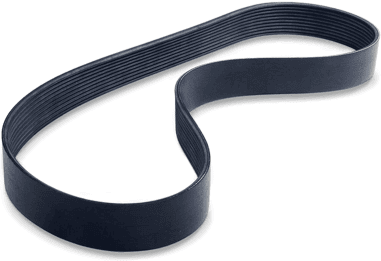
MEYLE 050 006 1815 Serpentine beltLength [mm]: 1815; Number of ribs: 6; Material: EPDM (ethylene propylene diene Monomer (M-class) rubber); Supplementary Info: ORIGINAL Quality; Driven Units: Alternator, Power steering pump, Air conditioning compressor; Vehicle Equipment: for vehicles without air conditioning, for vehicles with air conditioning; Construction Year to: 06/1993; for OE number: 6066725711,99 £*Shipping: 8,45 £Secure redirect to the provider
-
MEYLE 050 007 1815 Serpentine beltLength [mm]: 1815; Number of ribs: 7; Material: EPDM (ethylene propylene diene Monomer (M-class) rubber); Supplementary Info: ORIGINAL Quality; Driven Units: Alternator; Emissions Standard: Euro 5; Vehicle Equipment: for vehicles without air conditioning, for vehicles with electr. auxiliary heater; Construction Year from: 01/2010; Construction Year to: 12/201220,49 £*Shipping: 8,45 £Secure redirect to the provider
-
METELLI 15-1815 CV joint kitThread Size: M22x1.5, M22x1,5; External Toothing wheel side: 32; Internal Toothing wheel side: 26; Seal Ring Diameter [mm]: 56,6; Outer Diameter [mm]: 90,8; Bellows Material: Rubber; Material: Rubber; Fitting Position: Front Axle, Wheel Side; Transmission Type: Automatic Transmission, Manual Transmission; Number of Gears: 6 Speed100,99 £*Shipping: 8,45 £Secure redirect to the provider
-
VEMO V15-01-1815 Fan, radiatorHeating/Cooling: Single Fan; Voltage [V]: 12; Switching Capacity [W]: 250/ 150; Operating Mode: Electric; Outer Diameter [mm]: 305; Number of fan blades: 7; Weight [kg]: 3; Packaging width [cm]: 36,1; Packaging height [cm]: 35,2; Product line: Original Quality; Required quantity: 1; Engine Code: RF, 2E, ABS; Construction Year from: 01/1988, 01/1990, 01/1996; Vehicle Identification Number (VIN) from: 31-J-000 001; Vehicle Identification Number (VIN) to: 31-M-033 271, 1E2800000; Vehicle Equipment: for vehicles with trailer hitch, for vehicles without air conditioning, for vehicles without trailer hitch, for vehicles with electr. auxiliary heater, for vehicles with air conditioning; Climate Zones: for hot climate zones, not for hot climate zones; Fitting Position: Left; Construction Year to: 06/1994, 12/1993, 06/1995, 02/1998, 06/1996, 12/1991, 08/1999, 03/2002; Transmission Type: 5-Speed Manual Transmission, 4-Speed Automatic Transmission; TecDoc Engine Number: 4973, 4982, 4988, 9991, 9384, 3570, 4961, 5536, 4989, 15488, 15489, 4985; for PR number: 0Y2, 1D2, 1D3, 9AA; Special Purpose Vehicle: for special-purpose vehicles46,99 £*Shipping: 8,45 £Secure redirect to the provider


-
What was the German Confederation in 1815?
The German Confederation was a loose association of 39 German states that was established in 1815 after the defeat of Napoleon. It was created as a response to the Napoleonic Wars and the Congress of Vienna, with the goal of maintaining the balance of power in Europe. The Confederation was led by Austria and Prussia and was intended to provide a framework for cooperation and mutual defense among the German states. However, it was a weak and decentralized entity, and its inability to address the growing nationalist sentiments and liberal movements within the German states eventually led to its dissolution in 1866. **
-
What happened to Moses in the year 1815?
In the year 1815, Moses Mendelssohn, a prominent Jewish philosopher and Enlightenment thinker, had passed away. He died in 1786, so there were no significant events related to him in 1815. However, his legacy continued to influence Jewish thought and the broader intellectual landscape throughout the 19th century. **
-
Where did students live around 1815 at universities?
Around 1815, students at universities typically lived in boarding houses or with local families in the town or city where the university was located. There were usually limited on-campus housing options, so students often had to find accommodations off-campus. Boarding houses provided a place for students to live and eat, while living with local families allowed students to experience the local culture and community. This arrangement also provided students with a more affordable living situation compared to on-campus housing. **
-
Where did students live at universities around 1815?
In the early 19th century, students at universities around 1815 typically lived in dormitories or boarding houses near the campus. These accommodations were often basic and shared among several students. Some universities also had a system of student "commons" where students could eat meals together. Overall, living arrangements for students during this time were more communal and focused on fostering a sense of community among the student body. **


What is your question for the girls of 1815?
What are your hopes and dreams for the future? How do you envision your role in society evolving as the world changes around you? And what challenges do you anticipate facing as you navigate the complexities of life in the 19th century? **
What happened during the Battle of Waterloo in 1815?
The Battle of Waterloo, which took place on June 18, 1815, was a significant conflict in which the French forces, led by Napoleon Bonaparte, were defeated by the Seventh Coalition, a coalition of European powers including the British, Dutch, and Prussian forces. The battle marked the end of Napoleon's rule as the Emperor of the French and the end of the Napoleonic Wars. The decisive victory at Waterloo led to Napoleon's abdication and exile to the island of Saint Helena, effectively ending his reign and restoring the Bourbon monarchy in France. **
Top-Angebote
Products related to 1815:
-
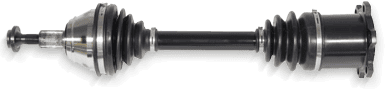
MAXGEAR 49-1815 Drive shaftExternal Toothing differential side: 25; External Toothing wheel side: 30; Length [mm]: 606; Length 2 [mm]: 78, 78,2; Transmission-sided joint diameter [mm]: 94; Wheel-sided joint diameter [mm]: 91; Thread Size: M24x1,5; Dust Cover: without dust cover; Fitting Position: Front Axle Left; Transmission Code: M32; Transmission Type: Manual Transmission; Construction Year from: 04/2004107,99 £*Shipping: 8,45 £Secure redirect to the provider
-
VAICO V10-1815 Tensioner pulleyWeight [kg]: 0,6266; Packaging width [cm]: 11,2; Packaging height [cm]: 12,6; Packaging Depth [cm]: 8,1; Supplementary Info: Original VAICO Quality; Fitting Position: Upper, Centre, Left; Driven Units: Alternator; Vehicle Equipment: for vehicles with air conditioning; TecDoc Engine Number: 24835, 25403, 24941, 23858, 20828, 23859, 23938, 20825, 24326, 23587, 24598, 24315, 20799, 21070, 20949, 20798, 25102, 18727, 19092, 24314, 22674, 24333, 23857, 20939, 22715, 24125, 20598, 20905, 20864, 24406, 24943, 23589, 23590, 24215, 27529, 27985, 26990, 28002, 23411, 23412; Vehicle Identification Number (VIN) from: 8E-4-000 001, 8E-4-010001, 5P-6-000001, 3C-D-000 001, 3C-E-000 001; Transmission Type: Fully Automatic, Manual Transmission; Engine Code: AVF, CFHC, BMS, BWB, CBDA, CFJA29,49 £*Shipping: 8,45 £Secure redirect to the provider
-
MEYLE 050 006 1815 Serpentine beltLength [mm]: 1815; Number of ribs: 6; Material: EPDM (ethylene propylene diene Monomer (M-class) rubber); Supplementary Info: ORIGINAL Quality; Driven Units: Alternator, Power steering pump, Air conditioning compressor; Vehicle Equipment: for vehicles without air conditioning, for vehicles with air conditioning; Construction Year to: 06/1993; for OE number: 6066725711,99 £*Shipping: 8,45 £Secure redirect to the provider
-
MEYLE 050 007 1815 Serpentine beltLength [mm]: 1815; Number of ribs: 7; Material: EPDM (ethylene propylene diene Monomer (M-class) rubber); Supplementary Info: ORIGINAL Quality; Driven Units: Alternator; Emissions Standard: Euro 5; Vehicle Equipment: for vehicles without air conditioning, for vehicles with electr. auxiliary heater; Construction Year from: 01/2010; Construction Year to: 12/201220,49 £*Shipping: 8,45 £Secure redirect to the provider
-
What happened in Saxony after 1815?
After 1815, Saxony became part of the German Confederation, a loose association of German states dominated by Austria and Prussia. The Kingdom of Saxony experienced political and social reforms, including the establishment of a constitutional monarchy in 1831. However, tensions between liberal and conservative factions persisted, leading to conflicts such as the May Uprising of 1849. Ultimately, Saxony became part of the German Empire in 1871 following the unification of Germany under Prussian leadership. **
-
What happened between 1815 and 1871?
Between 1815 and 1871, Europe experienced significant political and social changes. The period began with the Congress of Vienna in 1815, which aimed to restore stability and order in Europe after the Napoleonic Wars. This led to the establishment of the Concert of Europe, a system of diplomatic cooperation among the major powers. However, the rise of nationalism and the spread of liberal ideas led to revolutions and uprisings across Europe in 1848. These events ultimately contributed to the unification of Italy and Germany in the 1860s and 1871, marking the end of the period with the creation of two new nation-states. **
-
What was the German Confederation in 1815?
The German Confederation was a loose association of 39 German states that was established in 1815 after the defeat of Napoleon. It was created as a response to the Napoleonic Wars and the Congress of Vienna, with the goal of maintaining the balance of power in Europe. The Confederation was led by Austria and Prussia and was intended to provide a framework for cooperation and mutual defense among the German states. However, it was a weak and decentralized entity, and its inability to address the growing nationalist sentiments and liberal movements within the German states eventually led to its dissolution in 1866. **
-
What happened to Moses in the year 1815?
In the year 1815, Moses Mendelssohn, a prominent Jewish philosopher and Enlightenment thinker, had passed away. He died in 1786, so there were no significant events related to him in 1815. However, his legacy continued to influence Jewish thought and the broader intellectual landscape throughout the 19th century. **
Similar search terms for 1815
-
METELLI 15-1815 CV joint kitThread Size: M22x1.5, M22x1,5; External Toothing wheel side: 32; Internal Toothing wheel side: 26; Seal Ring Diameter [mm]: 56,6; Outer Diameter [mm]: 90,8; Bellows Material: Rubber; Material: Rubber; Fitting Position: Front Axle, Wheel Side; Transmission Type: Automatic Transmission, Manual Transmission; Number of Gears: 6 Speed100,99 £*Shipping: 8,45 £Secure redirect to the provider
-
VEMO V15-01-1815 Fan, radiatorHeating/Cooling: Single Fan; Voltage [V]: 12; Switching Capacity [W]: 250/ 150; Operating Mode: Electric; Outer Diameter [mm]: 305; Number of fan blades: 7; Weight [kg]: 3; Packaging width [cm]: 36,1; Packaging height [cm]: 35,2; Product line: Original Quality; Required quantity: 1; Engine Code: RF, 2E, ABS; Construction Year from: 01/1988, 01/1990, 01/1996; Vehicle Identification Number (VIN) from: 31-J-000 001; Vehicle Identification Number (VIN) to: 31-M-033 271, 1E2800000; Vehicle Equipment: for vehicles with trailer hitch, for vehicles without air conditioning, for vehicles without trailer hitch, for vehicles with electr. auxiliary heater, for vehicles with air conditioning; Climate Zones: for hot climate zones, not for hot climate zones; Fitting Position: Left; Construction Year to: 06/1994, 12/1993, 06/1995, 02/1998, 06/1996, 12/1991, 08/1999, 03/2002; Transmission Type: 5-Speed Manual Transmission, 4-Speed Automatic Transmission; TecDoc Engine Number: 4973, 4982, 4988, 9991, 9384, 3570, 4961, 5536, 4989, 15488, 15489, 4985; for PR number: 0Y2, 1D2, 1D3, 9AA; Special Purpose Vehicle: for special-purpose vehicles46,99 £*Shipping: 8,45 £Secure redirect to the provider
-
VAICO V30-1815 Inner tie rodFitting Position: Front Axle Left, Front Axle Right; Thread Size 1: M16 x 1,5; Spanner Size: 22; Thread Size 2: M14 x 1,5; Weight [kg]: 0,617; Packaging height [cm]: 4,2; Packaging Depth [cm]: 31,5; Supplementary Info: Original VAICO Quality13,49 £*Shipping: 8,45 £Secure redirect to the provider
-
Royal Doulton, 1815 Pacific - Mugs Blue 280mlSip your favourite hot drinks in style with this set of Pacific Mugs. With six striking designs inspired by the Ocean, decide whether dots, lines, brush, splash, circles or texture is your favourite. Crafted from chip-resistant white porcelain in a ‘perfectly-imperfect’ artisan style, each handle is slightly different making each piece as unique as you. The modern, fresh and on-trend Pacific Blue colour palette is designed to mix and match with the new Pacific Mint pieces. Share a tea or coffee over a catch-up with family and friends with these 260ml mugs. Royal Doulton80,00 £*Shipping: 0,00 £Secure redirect to the provider
-
Where did students live around 1815 at universities?
Around 1815, students at universities typically lived in boarding houses or with local families in the town or city where the university was located. There were usually limited on-campus housing options, so students often had to find accommodations off-campus. Boarding houses provided a place for students to live and eat, while living with local families allowed students to experience the local culture and community. This arrangement also provided students with a more affordable living situation compared to on-campus housing. **
-
Where did students live at universities around 1815?
In the early 19th century, students at universities around 1815 typically lived in dormitories or boarding houses near the campus. These accommodations were often basic and shared among several students. Some universities also had a system of student "commons" where students could eat meals together. Overall, living arrangements for students during this time were more communal and focused on fostering a sense of community among the student body. **
-
What is your question for the girls of 1815?
What are your hopes and dreams for the future? How do you envision your role in society evolving as the world changes around you? And what challenges do you anticipate facing as you navigate the complexities of life in the 19th century? **
-
What happened during the Battle of Waterloo in 1815?
The Battle of Waterloo, which took place on June 18, 1815, was a significant conflict in which the French forces, led by Napoleon Bonaparte, were defeated by the Seventh Coalition, a coalition of European powers including the British, Dutch, and Prussian forces. The battle marked the end of Napoleon's rule as the Emperor of the French and the end of the Napoleonic Wars. The decisive victory at Waterloo led to Napoleon's abdication and exile to the island of Saint Helena, effectively ending his reign and restoring the Bourbon monarchy in France. **
* All prices are inclusive of VAT and, if applicable, plus shipping costs. The offer information is based on the details provided by the respective shop and is updated through automated processes. Real-time updates do not occur, so deviations can occur in individual cases. ** Note: Parts of this content were created by AI.