Buy reviewing.com ?
We are moving the project
reviewing.com .
Are you interested in purchasing the domain
reviewing.com ?
domain@kv-gmbh.de · 0541-91531010
Buy reviewing.com ?
How do I further simplify and simplify the fraction?
To further simplify a fraction, you need to find the greatest common factor (GCF) of the numerator and denominator, and then divide both by this GCF. This will reduce the fraction to its simplest form. If the fraction is already simplified, there is no need for further simplification. Remember that a fraction is in its simplest form when the numerator and denominator have no common factors other than 1. **
How can one simplify brackets and simplify roots in mathematics?
To simplify brackets in mathematics, one can use the distributive property to expand the terms inside the brackets and then combine like terms. This involves multiplying each term inside the brackets by the term outside the brackets and then adding or subtracting the resulting terms. To simplify roots, one can factor the number inside the root to find perfect square factors, and then take the square root of those factors. This simplifies the expression by reducing the number inside the root to its simplest form. Additionally, one can combine like terms inside the root and outside the root to simplify the expression further. **


Similar search terms for Simplify
Top-Angebote
Products related to Simplify:
-
Scholastic Next Step Guided Reading Assessment, K-2Developed by leading literacy experts Jan Richardson, Ph.D., and Maria Walther, Ed.D., Next Step Guided Reading Assessment uses Richardson's proven Assess-Decide-Guide teaching system to pinpoint students' reading level and target instructional next...489,00 $*Shipping: 0,00 $Secure redirect to the provider


-
Why can't one simplify?
One may not be able to simplify because the problem or situation at hand is complex and multifaceted, requiring a thorough understanding of various factors and nuances. Additionally, simplifying may not be possible if there are conflicting interests, perspectives, or constraints that need to be taken into account. Furthermore, some issues may be inherently intricate and cannot be reduced to a simpler form without losing important details or considerations. **
-
How do you simplify this?
To simplify an expression or equation, you need to combine like terms, perform any necessary operations (such as addition, subtraction, multiplication, or division), and follow the order of operations. Look for terms that can be combined or simplified, and then apply the appropriate operations to simplify the expression further. Keep simplifying until you cannot simplify any further, and the expression is in its simplest form. **
-
How can one simplify 12?
One way to simplify 12 is to find its factors and simplify any fractions. The factors of 12 are 1, 2, 3, 4, 6, and 12. To simplify 12, you can divide it by any of these factors to find a smaller whole number. Another way to simplify 12 is to express it as a product of its prime factors, which would be 2 x 2 x 3. **
-
How do you simplify terms?
To simplify terms, you combine like terms by adding or subtracting them. Like terms are terms that have the same variables raised to the same powers. You can also simplify terms by using the distributive property to factor out common factors. Finally, you can simplify terms by performing operations such as multiplication or division. **

How can one simplify percentages?
One way to simplify percentages is to convert them into fractions or decimals. For example, 25% can be simplified to 1/4 or 0.25. Another way is to use basic math operations such as multiplication and division. For instance, to find 20% of a number, you can multiply the number by 0.2. Lastly, it can be helpful to use common percentages as reference points, such as knowing that 50% is equal to half or 10% is equal to one-tenth. **
How do you simplify logarithms?
To simplify logarithms, you can use the properties of logarithms. One common property is the power rule, which states that log base b of x to the power of n is equal to n times log base b of x. You can also use the product rule, which states that the log of a product is equal to the sum of the logs of the individual factors. Additionally, you can use the quotient rule, which states that the log of a quotient is equal to the difference of the logs of the numerator and denominator. By applying these rules, you can simplify logarithmic expressions to make them easier to work with. **
Top-Angebote
Products related to Simplify:
-
Zwilling Simplify 16cm Stock PotThe 16cm Zwilling Simplify Stock Pot is made from modern matt stainless steel with soft touch silicone casing. The 16cm stockpot features a holder on the lid to rest on the side of the stock pot when not in use, preventing drips and mess on your worktop and also features two different sized integrated sieve holes for easy draining within the silicone casing. Suitable for all hop types inlcuding induction, this 16cm stock pot is equipped with a SIGMA Classic + sandwich base that completes this superb package for cooking with comfort. Suitbale for use in the oven up to 180°C and features a mark on the lid to indicate the optimal lid position for reducing steam output. Capacity: 2 litres. Size: 14.5(H) x 17.3(W) x 25.6(L)cm. Weight: 1.00kg.81,75 £*Shipping: 0,00 £Secure redirect to the provider
-
Zwilling Simplify 20cm Stock PotThe 20cm Zwilling Simplify Stock Pot is made from modern matt stainless steel with soft touch silicone casing. The 20cm stockpot features a holder on the lid to rest on the side of the stock pot when not in use, preventing drips and mess on your worktop and also features two different sized integrated sieve holes for easy draining within the silicone casing. Suitable for all hop types inlcuding induction, this 20cm stock pot is equipped with a SIGMA Classic + sandwich base that completes this superb package for cooking with comfort. Suitbale for use in the oven up to 180°C and features a mark on the lid to indicate the optimal lid position for reducing steam output. Capacity: 3.5 litres. Size: 16.5(H) x 21.3(W) x 29.6(L)cm. Weight: 1.98kg.89,25 £*Shipping: 0,00 £Secure redirect to the provider
-
How do I further simplify and simplify the fraction?
To further simplify a fraction, you need to find the greatest common factor (GCF) of the numerator and denominator, and then divide both by this GCF. This will reduce the fraction to its simplest form. If the fraction is already simplified, there is no need for further simplification. Remember that a fraction is in its simplest form when the numerator and denominator have no common factors other than 1. **
-
How can one simplify brackets and simplify roots in mathematics?
To simplify brackets in mathematics, one can use the distributive property to expand the terms inside the brackets and then combine like terms. This involves multiplying each term inside the brackets by the term outside the brackets and then adding or subtracting the resulting terms. To simplify roots, one can factor the number inside the root to find perfect square factors, and then take the square root of those factors. This simplifies the expression by reducing the number inside the root to its simplest form. Additionally, one can combine like terms inside the root and outside the root to simplify the expression further. **
-
Why can't one simplify?
One may not be able to simplify because the problem or situation at hand is complex and multifaceted, requiring a thorough understanding of various factors and nuances. Additionally, simplifying may not be possible if there are conflicting interests, perspectives, or constraints that need to be taken into account. Furthermore, some issues may be inherently intricate and cannot be reduced to a simpler form without losing important details or considerations. **
-
How do you simplify this?
To simplify an expression or equation, you need to combine like terms, perform any necessary operations (such as addition, subtraction, multiplication, or division), and follow the order of operations. Look for terms that can be combined or simplified, and then apply the appropriate operations to simplify the expression further. Keep simplifying until you cannot simplify any further, and the expression is in its simplest form. **
Similar search terms for Simplify
-
Scholastic Next Step Guided Reading Assessment, K-2Developed by leading literacy experts Jan Richardson, Ph.D., and Maria Walther, Ed.D., Next Step Guided Reading Assessment uses Richardson's proven Assess-Decide-Guide teaching system to pinpoint students' reading level and target instructional next...489,00 $*Shipping: 0,00 $Secure redirect to the provider
-
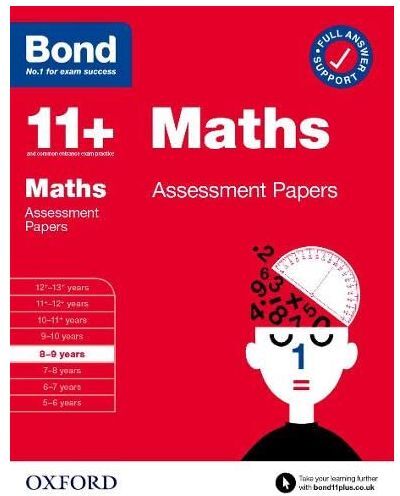
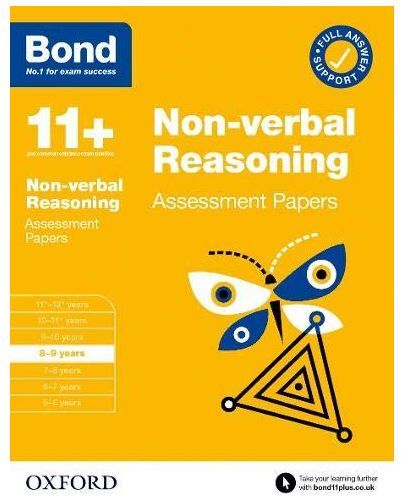
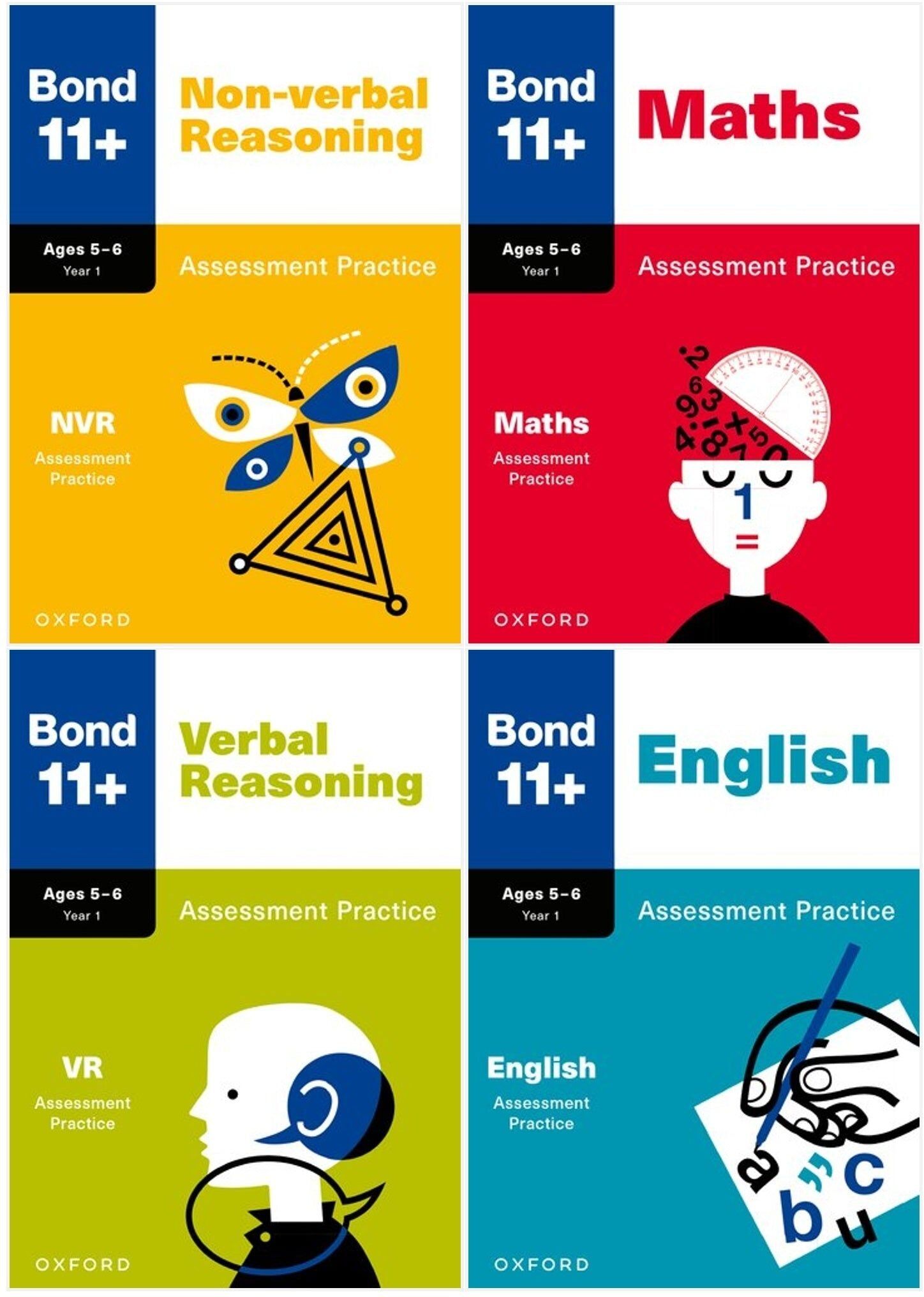
OXFORD UNIVERSITY PRESS Bond 11+ Maths English Verbal Non-Verbal Reasoning Assessment Practice 5-6 years 4 Books Set (Bond Assessment Papers)Bond 11+ English; Maths; Non-verbal Reasoning; Verbal Reasoning Assessment Practice 4 Books Set (Age 5-6) The pack includes the following 4 books (Bond 11 Plus books) Bond 11+ Maths Assessment Practice Ages 5-6 Bond Maths Assessment Practice for 5-6 years are topic-based practice questions that set the foundation for success in SATs; common entrance or 11+ exams. They have been written to cover the core National Curriculum skills and cover the question types used in 11+ exams; building the skills and confidence for exam success. Bond 11+ English Assessment Practice Ages 5-6 Bond English Assessment Practice for 5-6 years are topic-based practice questions that set the foundation for success in SATs; common entrance or 11+ exams. They have been written to cover the core National Curriculum skills and cover the question types used in 11+ exams; building the skills and confidence for exam success Bond 11+ Verbal Reasoning Assessment Practice Ages 5-6 Bond Verbal Reasoning Assessment Practice for 5-6 years introduces children to verbal reasoning problem-solving skills; encouraging thinking skills and providing early preparation for Common Entrance and 11+ exams. Bond 11+ Non-Verbal Reasoning Assessment Practice Ages 5-6 Bond Non-verbal Reasoning Assessment Practice for 5-6 years introduces children to non-verbal reasoning problem-solving skills; encouraging thinking skills and providing early preparation for Common Entrance and 11+ exams.14,40 £*Shipping: 2,99 £Secure redirect to the provider
-
OXFORD UNIVERSITY PRESS Bond 11+ Maths English Verbal Non-Verbal Reasoning Assessment Practice 6-7 years 4 Books Set (Bond Assessment Papers)Bond 11+ Maths English Verbal Non-Verbal Reasoning Assessment Practice 6-7 years 4 Books Set (Bond Assessment Papers) Year 2 Developed and written by experienced tutors, Bond 11+ Assessment Practice Books offer exam-style practice questions, perfect for preparing for the GL 11+ exam and other selective school tests, with full answer explanations in a removable booklet. Bond 11+ English Assessment Practice Age 6-7: Covers all of the core 11+ English exam topics including comprehension, spelling, sentences, punctuation, and grammar Bond 11+ Maths Assessment Practice Age 6-7: Covers a wide variety of maths topics including place value, multiplication and division, fractions, shapes, measurement, and diagrams Bond 11+ Non-verbal Reasoning Assessment Practice Age 6-7: Covers a wide variety of non-verbal reasoning topics including shapes, angles and rotation, similarities, sequences, reflections, and grids Bond 11+ Verbal Reasoning Assessment Practice Age 6-7: Covers a wide variety of verbal reasoning topics including word meanings, word connections, missing letters, patterns and sequences, anagrams, and codes15,99 £*Shipping: 2,99 £Secure redirect to the provider
-
How can one simplify 12?
One way to simplify 12 is to find its factors and simplify any fractions. The factors of 12 are 1, 2, 3, 4, 6, and 12. To simplify 12, you can divide it by any of these factors to find a smaller whole number. Another way to simplify 12 is to express it as a product of its prime factors, which would be 2 x 2 x 3. **
-
How do you simplify terms?
To simplify terms, you combine like terms by adding or subtracting them. Like terms are terms that have the same variables raised to the same powers. You can also simplify terms by using the distributive property to factor out common factors. Finally, you can simplify terms by performing operations such as multiplication or division. **
-
How can one simplify percentages?
One way to simplify percentages is to convert them into fractions or decimals. For example, 25% can be simplified to 1/4 or 0.25. Another way is to use basic math operations such as multiplication and division. For instance, to find 20% of a number, you can multiply the number by 0.2. Lastly, it can be helpful to use common percentages as reference points, such as knowing that 50% is equal to half or 10% is equal to one-tenth. **
-
How do you simplify logarithms?
To simplify logarithms, you can use the properties of logarithms. One common property is the power rule, which states that log base b of x to the power of n is equal to n times log base b of x. You can also use the product rule, which states that the log of a product is equal to the sum of the logs of the individual factors. Additionally, you can use the quotient rule, which states that the log of a quotient is equal to the difference of the logs of the numerator and denominator. By applying these rules, you can simplify logarithmic expressions to make them easier to work with. **
* All prices are inclusive of VAT and, if applicable, plus shipping costs. The offer information is based on the details provided by the respective shop and is updated through automated processes. Real-time updates do not occur, so deviations can occur in individual cases. ** Note: Parts of this content were created by AI.