Buy reviewing.com ?
We are moving the project
reviewing.com .
Are you interested in purchasing the domain
reviewing.com ?
domain@kv-gmbh.de · 0541-91531010
Buy reviewing.com ?
Are punctuation marks and emojis analogous?
Punctuation marks and emojis serve different purposes in written communication. Punctuation marks are used to clarify the structure and meaning of a sentence, while emojis are used to convey emotions, tone, and nonverbal cues. While both can enhance written communication, they are not entirely analogous as they serve different functions. Emojis are more akin to nonverbal cues in face-to-face communication, while punctuation marks are more about organizing and clarifying written text. **
Are bat wings homologous or analogous?
Bat wings are homologous structures, meaning they share a common evolutionary origin with the wings of other mammals, such as humans and whales. This suggests that bats, humans, and whales all inherited their limb structure from a common ancestor. In contrast, analogous structures are those that have similar functions but different evolutionary origins, such as the wings of birds and insects. **
Similar search terms for Analogous
Top-Angebote
Products related to Analogous:
-
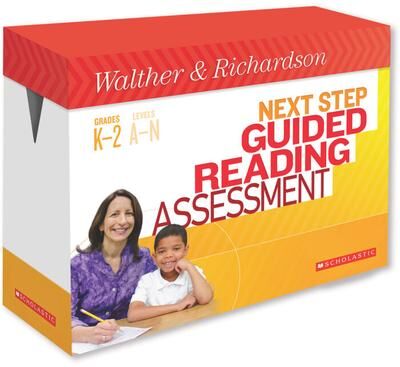
Scholastic Next Step Guided Reading Assessment, K-2Developed by leading literacy experts Jan Richardson, Ph.D., and Maria Walther, Ed.D., Next Step Guided Reading Assessment uses Richardson's proven Assess-Decide-Guide teaching system to pinpoint students' reading level and target instructional next...489,00 $*Shipping: 0,00 $Secure redirect to the provider
-
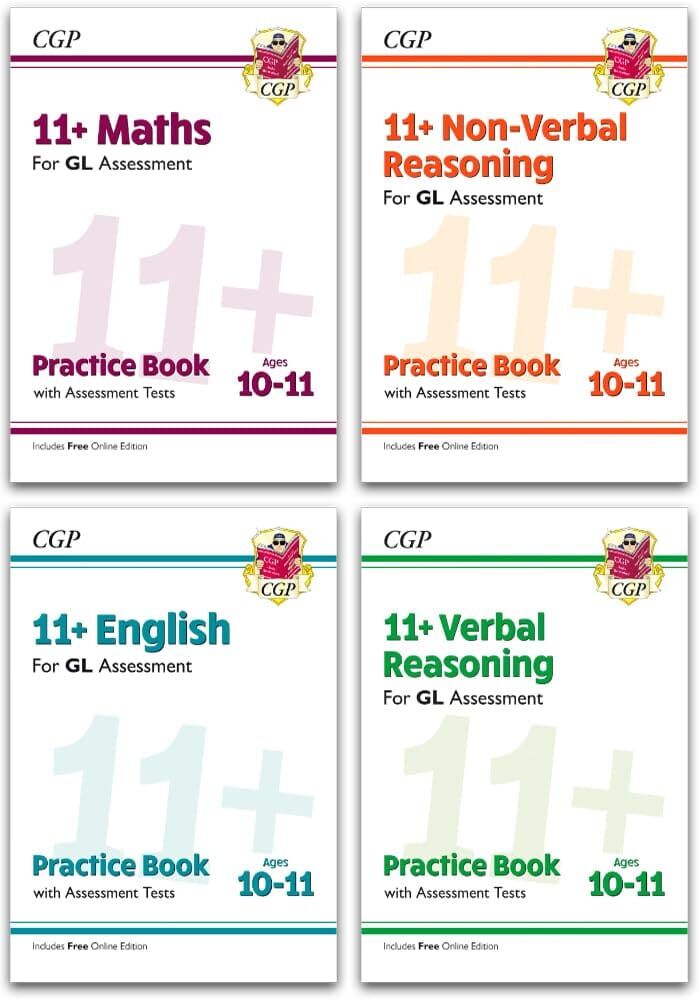
CGP 11+ Practice Book & Assessment Tests Bundle (for GL Assessment) 4 Books Set - Ages 10-11 - Paperback (Includes Free Online Edition) Coordination Group Publications Ltd (CGP)Titles in this Set: 1. 11+ GL Verbal Reasoning Practice Book & Assessment Tests 2. 11+ GL Non-Verbal Reasoning Practice Book & Assessment Tests 3. 11+ GL Maths Practice Book & Assessment Tests 4. 11+ GL English Practice Book & Assessment Tests Description: 11+ GL Verbal Reasoning Practice Book & Assessment Tests With its huge range of Verbal Reasoning questions for ages 10-11, this book is an excellent way to prepare for the 11+ test and other selective entrance exams. The first section of the book focuses on one topic at a time to help children gain understanding and confidence. This is followed by six realistic Assessment Tests to improve their speed and accuracy across a wide range of questions. And if they get stuck or go wrong, the detailed answers at the back of the book make it easy to understand the reasoning behind the questions. 11+ GL Non-Verbal Reasoning Practice Book & Assessment Tests Looking for extra-challenging practice for 11+ Verbal Reasoning? This book is packed with a wide range of practice questions set at the level of the trickiest 11+ questions — and beyond! The first part of the book focuses on one question type at a time to help children master the key skills needed for the GL test, including Comprehension, with a wide range of extra-tricky practice questions set at the very top level of the 11+ and beyond, so they’ll be ready for anything that gets thrown at them. The second part contains a selection of realistic Assessment Tests, with the later tests being even trickier than the real 11+. And if they get stuck, detailed answers make it easy to understand the reasoning behind the questions. 11+ GL Maths Practice Book & Assessment Tests Perfect for children aged 10-11 preparing for 11+ Maths and other selective entrance exams, this book contains a huge range of questions at the level of the final tests. The first section of the book focuses on one topic at a time to help children gain understanding and confidence. This is followed by four realistic Assessment Tests to improve their speed and accuracy across a wide range of questions. And if they get stuck or go wrong, the detailed answers at the back of the book make it easy to understand the reasoning behind the questions. 11+ GL English Practice Book & Assessment Tests Ideal for preparation in the run-up to the 11+ English test and other selective entrance exams, this book contains a huge range of questions at the level of the final tests. The first section of the book focuses on one topic at a time to help children gain understanding and confidence. This is followed by six realistic Assessment Tests to improve their speed and accuracy across a wide range of questions. And if they get stuck or go wrong, the detailed answers at the back of the book make it easy to understand the reasoning behind the questions.28,99 £*Shipping: 2,99 £Secure redirect to the provider
-
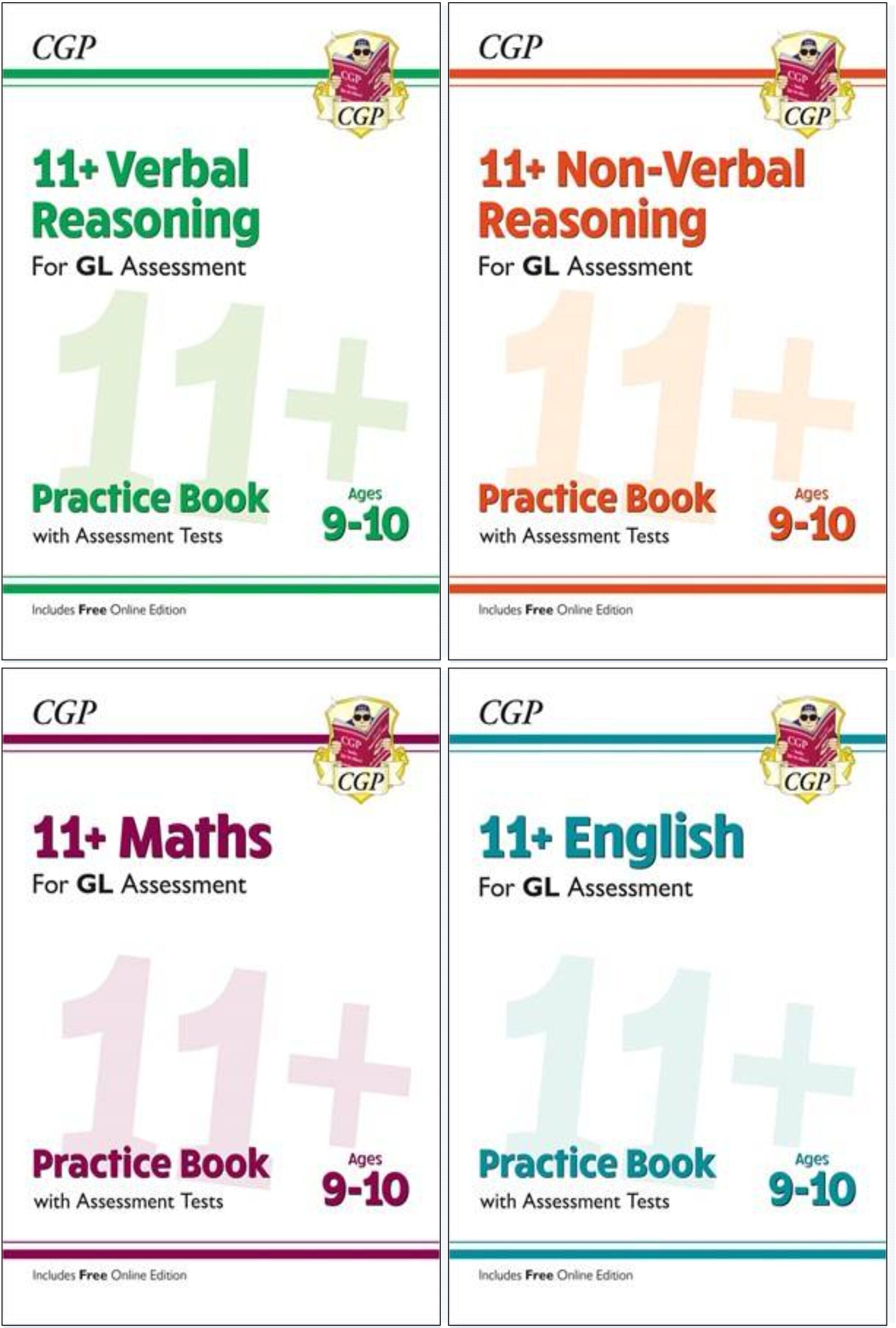
CGP 11+ Practice Book and Assessment Tests Bundle (for GL Assessment) 4 Books Set - Ages 9-10 - Paperback (Includes Free Online Edition) Coordination Group Publications Ltd (CGP)Titles in this Set: 1. 11+ GL Verbal Reasoning Practice Book & Assessment Tests 2. 11+ GL Non-Verbal Reasoning Practice Book & Assessment Tests 3. 11+ GL Maths Practice Book & Assessment Tests 4. 11+ GL English Practice Book & Assessment Tests Description: 11+ GL Verbal Reasoning Practice Book & Assessment Tests Ideal for building up the Verbal Reasoning skills children will need for the 11+ (and other selective entrance exams), this book is packed with targeted practice questions for ages 9-10. The first section of the book focuses on one topic at a time to help children gain understanding and confidence. This is followed by seven Assessment Tests to improve their speed and accuracy across a wide range of questions. And if they get stuck or go wrong, the detailed answers at the back of the book make it easy to understand the reasoning behind the questions. 11+ GL Non-Verbal Reasoning Practice Book & Assessment Tests Ideal for building the key skills children need for 11+ Non-Verbal Reasoning (and other selective entrance exams), this book contains a wide range of practice questions set at a level that’s perfect for ages 9-10. The first section of the book focuses on one topic at a time to help children gain understanding and confidence. This is followed by a selection of Assessment Tests to improve pupils' speed and accuracy across a wide range of questions. And if they get stuck or go wrong, the detailed answers at the back of the book make it easy to understand the reasoning behind the questions. 11+ GL Maths Practice Book & Assessment Tests This book is brimming with Maths questions (with fully explained answers) for ages 9-10 – it's a fantastic resource for helping children work towards the 11+. The first section of the book focuses on one topic at a time to help children gain understanding and confidence, followed by realistic Assessment Tests to improve their speed and accuracy across a wide range of questions. This book is ideal for the 11+ tests set by GL Assessment and other test providers, and provides excellent practice for the Kent Test. 11+ GL English Practice Book & Assessment Tests This Practice Book is an excellent resource for helping children work towards the 11+ English test and other selective entrance exams. It’s full of questions set at a level that’s typically suitable for ages 9-10. The first section of the book focuses on one topic at a time to help children gain understanding and confidence. This is followed by six Assessment Tests to improve their speed and accuracy across a wide range of questions. And if they get stuck or go wrong, the detailed answers at the back of the book make it easy to understand the reasoning behind the questions.27,99 £*Shipping: 2,99 £Secure redirect to the provider
-
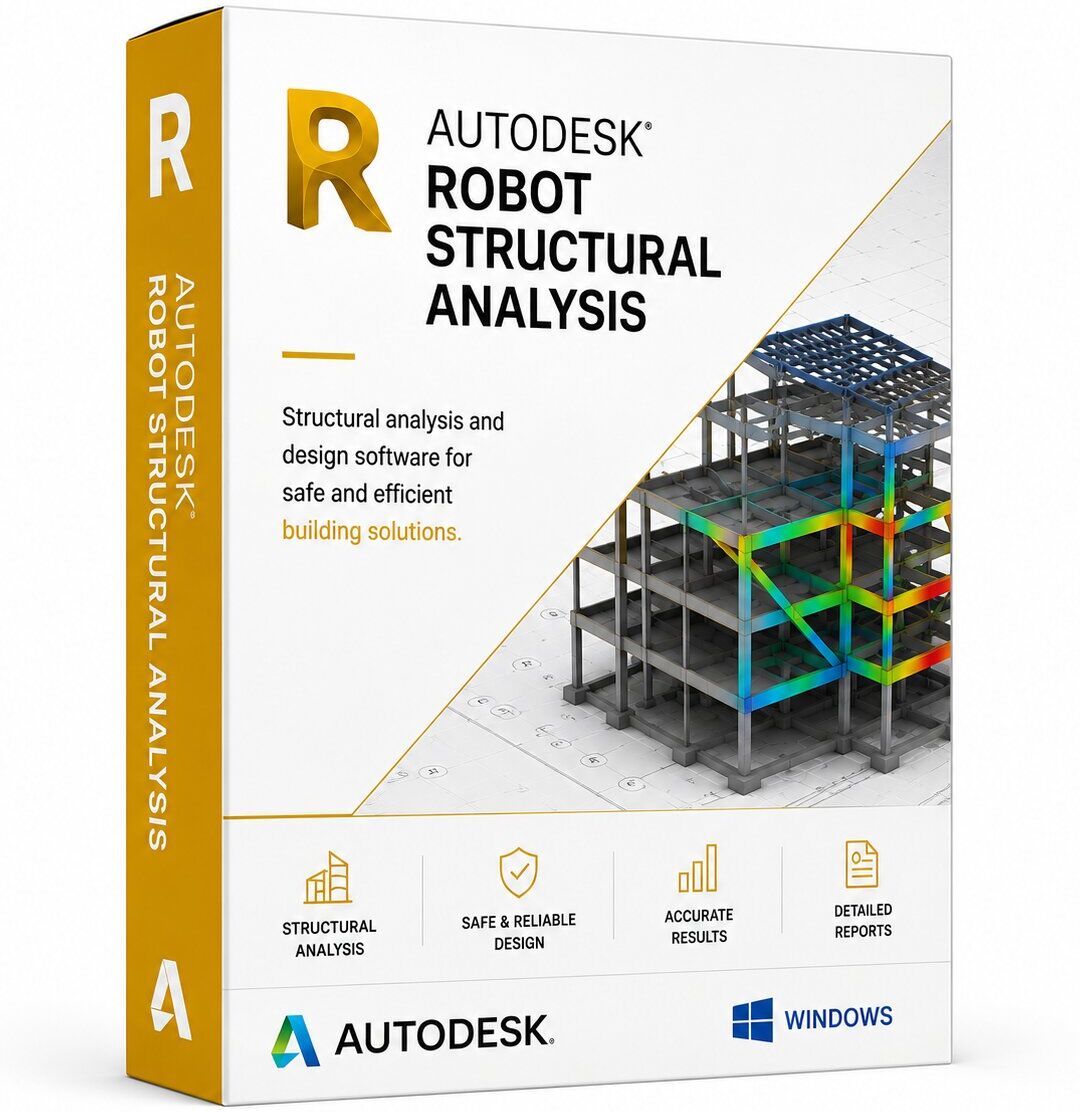
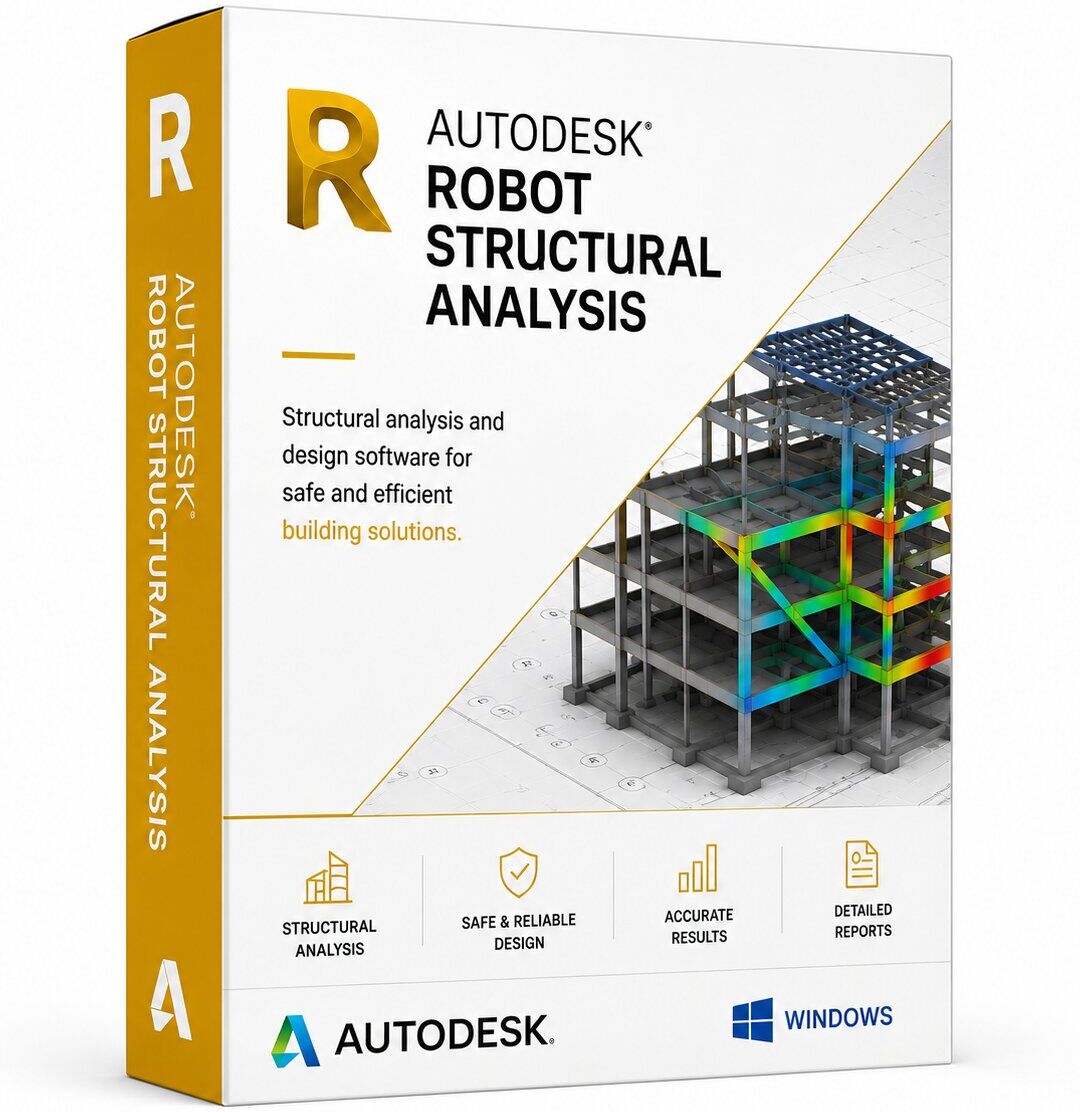
AUTODESK ROBOT STRUCTURAL ANALYSIS 2026AUTODESK ROBOT STRUCTURAL ANALYSIS LIZENZ Original und garantiert von Nextdigitalkey.com Autodesk Robot Structural Analysis Professional ist eine leistungsstarke FEM-Software (Finite-Elemente-Methode) für die statische und dynamische Analyse von Tragwerken. Sie wird von Statikern und Bauingenieuren weltweit zur präzisen Berechnung und Dimensionierung von Gebäuden und Infrastrukturen eingesetzt. Mit Robot Structural Analysis können Sie: - Statische und dynamische Berechnungen für beliebige Tragwerkstypen durchführen - Stahl-, Beton- und Holzstrukturen nach internationalen Normen (EN, AISC, etc.) bemessen - Nahtlos mit Revit und AutoCAD zusammenarbeiten – dank bidirektionaler BIM-Integration - Erdbeben-, Wind- und Schneelasten nach aktuellen Normen automatisch generieren - Detaillierte Bemessungsberichte und Werkstattzeichnungen exportieren Warum Robot Structural Analysis? Robot bietet eine vollständige Lösung für Tragwerksplanung – von der Modellierung bis zur Norm-konformen Bemessung – und spart durch die enge Revit-Integration erheblich Zeit bei Planungsänderungen. Lizenzinformationen: - Zugang: Vollständig - Sprache: Mehrsprachig - Geräte: 1 - Betriebssystem: Windows - Lizenztyp: Dauerhaft (ohne Ablaufdatum) Was Sie nach dem Kauf erhalten: - Offizieller Produktschlüssel - Downloadlink zur offiziellen Autodesk-Webseite - Installationsanleitung auf Deutsch Download: Der Download erfolgt direkt über die offizielle Autodesk-Webseite. Preis und Legalität: Unsere Lizenzen stammen aus dem Wiederverkauf entbundener Einzelhandelslizenzen gemäß dem Urteil des Europäischen Gerichtshofs (C-128/2011). Alle Lizenzen sind original, digital (ESD), sofort verfügbar und beliebig oft auf demselben Gerät installierbar. Support: Technischer Support rund um die Uhr per Fernzugriff – auch an Wochenenden und Feiertagen verfügbar.89,95 £*Shipping: 0,00 £Secure redirect to the provider
-
Are Maybugs analogous or homologous animals?
Maybugs, also known as cockchafers, are not analogous or homologous to any other animals. They are a unique species of beetle belonging to the family Scarabaeidae. Analogous structures are similar in function but not in structure or evolutionary origin, while homologous structures are similar in structure and evolutionary origin but not necessarily in function. Maybugs do not share these similarities with any other animals, making them a distinct and separate species. **
-
Are mole and mole cricket analogous or homologous?
Mole and mole cricket are analogous structures because they have similar functions (burrowing underground) but do not share a common evolutionary origin. Mole is a mammal, while mole cricket is an insect, so they are not homologous structures. Analogous structures evolve independently in different species to serve the same purpose, while homologous structures are inherited from a common ancestor. **
-
What are homologous and analogous structures in plants?
Homologous structures in plants are features that have a similar underlying structure and origin, but may have different functions. For example, the wings of a bird and the arms of a human are homologous structures because they both have a similar bone structure, even though they serve different purposes. In plants, homologous structures can include similar leaf or flower structures that have evolved from a common ancestor. Analogous structures in plants, on the other hand, are features that have a similar function but different underlying structures and origins. For example, the wings of a bird and the wings of a butterfly are analogous structures because they both serve the function of flight, but have different anatomical origins. In plants, analogous structures can include similar leaf shapes or reproductive structures that have evolved independently in different plant lineages to serve similar functions. **
-
What is the difference between equivalent and analogous?
The main difference between equivalent and analogous is that equivalent refers to things that are equal in value, function, or meaning, while analogous refers to things that are similar in some way but not necessarily equal in value or function. For example, two equivalent fractions have the same value, while two analogous situations may share similarities but have different outcomes. In summary, equivalent implies equality, while analogous implies similarity. **
Are spines and thorns in biology homologous or analogous?
Spines and thorns in biology are considered analogous structures. This means that they have similar functions (protection) but do not share a common evolutionary origin. Spines can be found in a variety of organisms, such as cacti and porcupines, while thorns are typically found in plants like roses and blackberries. Despite their similar functions, spines and thorns evolved independently in different lineages to serve the purpose of defense. **
What is the definition of homologous and analogous organs?
Homologous organs are structures that have a similar origin in different species, suggesting a common evolutionary ancestor. These organs may have different functions in different species but share a common underlying structure. On the other hand, analogous organs are structures that have a similar function in different species but do not share a common evolutionary origin. Analogous organs have evolved independently in different species to serve the same purpose. **
Top-Angebote
Products related to Analogous:
-
Scholastic Next Step Guided Reading Assessment, K-2Developed by leading literacy experts Jan Richardson, Ph.D., and Maria Walther, Ed.D., Next Step Guided Reading Assessment uses Richardson's proven Assess-Decide-Guide teaching system to pinpoint students' reading level and target instructional next...489,00 $*Shipping: 0,00 $Secure redirect to the provider
-
CGP 11+ Practice Book & Assessment Tests Bundle (for GL Assessment) 4 Books Set - Ages 10-11 - Paperback (Includes Free Online Edition) Coordination Group Publications Ltd (CGP)Titles in this Set: 1. 11+ GL Verbal Reasoning Practice Book & Assessment Tests 2. 11+ GL Non-Verbal Reasoning Practice Book & Assessment Tests 3. 11+ GL Maths Practice Book & Assessment Tests 4. 11+ GL English Practice Book & Assessment Tests Description: 11+ GL Verbal Reasoning Practice Book & Assessment Tests With its huge range of Verbal Reasoning questions for ages 10-11, this book is an excellent way to prepare for the 11+ test and other selective entrance exams. The first section of the book focuses on one topic at a time to help children gain understanding and confidence. This is followed by six realistic Assessment Tests to improve their speed and accuracy across a wide range of questions. And if they get stuck or go wrong, the detailed answers at the back of the book make it easy to understand the reasoning behind the questions. 11+ GL Non-Verbal Reasoning Practice Book & Assessment Tests Looking for extra-challenging practice for 11+ Verbal Reasoning? This book is packed with a wide range of practice questions set at the level of the trickiest 11+ questions — and beyond! The first part of the book focuses on one question type at a time to help children master the key skills needed for the GL test, including Comprehension, with a wide range of extra-tricky practice questions set at the very top level of the 11+ and beyond, so they’ll be ready for anything that gets thrown at them. The second part contains a selection of realistic Assessment Tests, with the later tests being even trickier than the real 11+. And if they get stuck, detailed answers make it easy to understand the reasoning behind the questions. 11+ GL Maths Practice Book & Assessment Tests Perfect for children aged 10-11 preparing for 11+ Maths and other selective entrance exams, this book contains a huge range of questions at the level of the final tests. The first section of the book focuses on one topic at a time to help children gain understanding and confidence. This is followed by four realistic Assessment Tests to improve their speed and accuracy across a wide range of questions. And if they get stuck or go wrong, the detailed answers at the back of the book make it easy to understand the reasoning behind the questions. 11+ GL English Practice Book & Assessment Tests Ideal for preparation in the run-up to the 11+ English test and other selective entrance exams, this book contains a huge range of questions at the level of the final tests. The first section of the book focuses on one topic at a time to help children gain understanding and confidence. This is followed by six realistic Assessment Tests to improve their speed and accuracy across a wide range of questions. And if they get stuck or go wrong, the detailed answers at the back of the book make it easy to understand the reasoning behind the questions.28,99 £*Shipping: 2,99 £Secure redirect to the provider
-
Are punctuation marks and emojis analogous?
Punctuation marks and emojis serve different purposes in written communication. Punctuation marks are used to clarify the structure and meaning of a sentence, while emojis are used to convey emotions, tone, and nonverbal cues. While both can enhance written communication, they are not entirely analogous as they serve different functions. Emojis are more akin to nonverbal cues in face-to-face communication, while punctuation marks are more about organizing and clarifying written text. **
-
Are bat wings homologous or analogous?
Bat wings are homologous structures, meaning they share a common evolutionary origin with the wings of other mammals, such as humans and whales. This suggests that bats, humans, and whales all inherited their limb structure from a common ancestor. In contrast, analogous structures are those that have similar functions but different evolutionary origins, such as the wings of birds and insects. **
-
Are Maybugs analogous or homologous animals?
Maybugs, also known as cockchafers, are not analogous or homologous to any other animals. They are a unique species of beetle belonging to the family Scarabaeidae. Analogous structures are similar in function but not in structure or evolutionary origin, while homologous structures are similar in structure and evolutionary origin but not necessarily in function. Maybugs do not share these similarities with any other animals, making them a distinct and separate species. **
-
Are mole and mole cricket analogous or homologous?
Mole and mole cricket are analogous structures because they have similar functions (burrowing underground) but do not share a common evolutionary origin. Mole is a mammal, while mole cricket is an insect, so they are not homologous structures. Analogous structures evolve independently in different species to serve the same purpose, while homologous structures are inherited from a common ancestor. **
Similar search terms for Analogous
-
CGP 11+ Practice Book and Assessment Tests Bundle (for GL Assessment) 4 Books Set - Ages 9-10 - Paperback (Includes Free Online Edition) Coordination Group Publications Ltd (CGP)Titles in this Set: 1. 11+ GL Verbal Reasoning Practice Book & Assessment Tests 2. 11+ GL Non-Verbal Reasoning Practice Book & Assessment Tests 3. 11+ GL Maths Practice Book & Assessment Tests 4. 11+ GL English Practice Book & Assessment Tests Description: 11+ GL Verbal Reasoning Practice Book & Assessment Tests Ideal for building up the Verbal Reasoning skills children will need for the 11+ (and other selective entrance exams), this book is packed with targeted practice questions for ages 9-10. The first section of the book focuses on one topic at a time to help children gain understanding and confidence. This is followed by seven Assessment Tests to improve their speed and accuracy across a wide range of questions. And if they get stuck or go wrong, the detailed answers at the back of the book make it easy to understand the reasoning behind the questions. 11+ GL Non-Verbal Reasoning Practice Book & Assessment Tests Ideal for building the key skills children need for 11+ Non-Verbal Reasoning (and other selective entrance exams), this book contains a wide range of practice questions set at a level that’s perfect for ages 9-10. The first section of the book focuses on one topic at a time to help children gain understanding and confidence. This is followed by a selection of Assessment Tests to improve pupils' speed and accuracy across a wide range of questions. And if they get stuck or go wrong, the detailed answers at the back of the book make it easy to understand the reasoning behind the questions. 11+ GL Maths Practice Book & Assessment Tests This book is brimming with Maths questions (with fully explained answers) for ages 9-10 – it's a fantastic resource for helping children work towards the 11+. The first section of the book focuses on one topic at a time to help children gain understanding and confidence, followed by realistic Assessment Tests to improve their speed and accuracy across a wide range of questions. This book is ideal for the 11+ tests set by GL Assessment and other test providers, and provides excellent practice for the Kent Test. 11+ GL English Practice Book & Assessment Tests This Practice Book is an excellent resource for helping children work towards the 11+ English test and other selective entrance exams. It’s full of questions set at a level that’s typically suitable for ages 9-10. The first section of the book focuses on one topic at a time to help children gain understanding and confidence. This is followed by six Assessment Tests to improve their speed and accuracy across a wide range of questions. And if they get stuck or go wrong, the detailed answers at the back of the book make it easy to understand the reasoning behind the questions.27,99 £*Shipping: 2,99 £Secure redirect to the provider
-
AUTODESK ROBOT STRUCTURAL ANALYSIS 2026AUTODESK ROBOT STRUCTURAL ANALYSIS LIZENZ Original und garantiert von Nextdigitalkey.com Autodesk Robot Structural Analysis Professional ist eine leistungsstarke FEM-Software (Finite-Elemente-Methode) für die statische und dynamische Analyse von Tragwerken. Sie wird von Statikern und Bauingenieuren weltweit zur präzisen Berechnung und Dimensionierung von Gebäuden und Infrastrukturen eingesetzt. Mit Robot Structural Analysis können Sie: - Statische und dynamische Berechnungen für beliebige Tragwerkstypen durchführen - Stahl-, Beton- und Holzstrukturen nach internationalen Normen (EN, AISC, etc.) bemessen - Nahtlos mit Revit und AutoCAD zusammenarbeiten – dank bidirektionaler BIM-Integration - Erdbeben-, Wind- und Schneelasten nach aktuellen Normen automatisch generieren - Detaillierte Bemessungsberichte und Werkstattzeichnungen exportieren Warum Robot Structural Analysis? Robot bietet eine vollständige Lösung für Tragwerksplanung – von der Modellierung bis zur Norm-konformen Bemessung – und spart durch die enge Revit-Integration erheblich Zeit bei Planungsänderungen. Lizenzinformationen: - Zugang: Vollständig - Sprache: Mehrsprachig - Geräte: 1 - Betriebssystem: Windows - Lizenztyp: Dauerhaft (ohne Ablaufdatum) Was Sie nach dem Kauf erhalten: - Offizieller Produktschlüssel - Downloadlink zur offiziellen Autodesk-Webseite - Installationsanleitung auf Deutsch Download: Der Download erfolgt direkt über die offizielle Autodesk-Webseite. Preis und Legalität: Unsere Lizenzen stammen aus dem Wiederverkauf entbundener Einzelhandelslizenzen gemäß dem Urteil des Europäischen Gerichtshofs (C-128/2011). Alle Lizenzen sind original, digital (ESD), sofort verfügbar und beliebig oft auf demselben Gerät installierbar. Support: Technischer Support rund um die Uhr per Fernzugriff – auch an Wochenenden und Feiertagen verfügbar.89,95 £*Shipping: 0,00 £Secure redirect to the provider
-
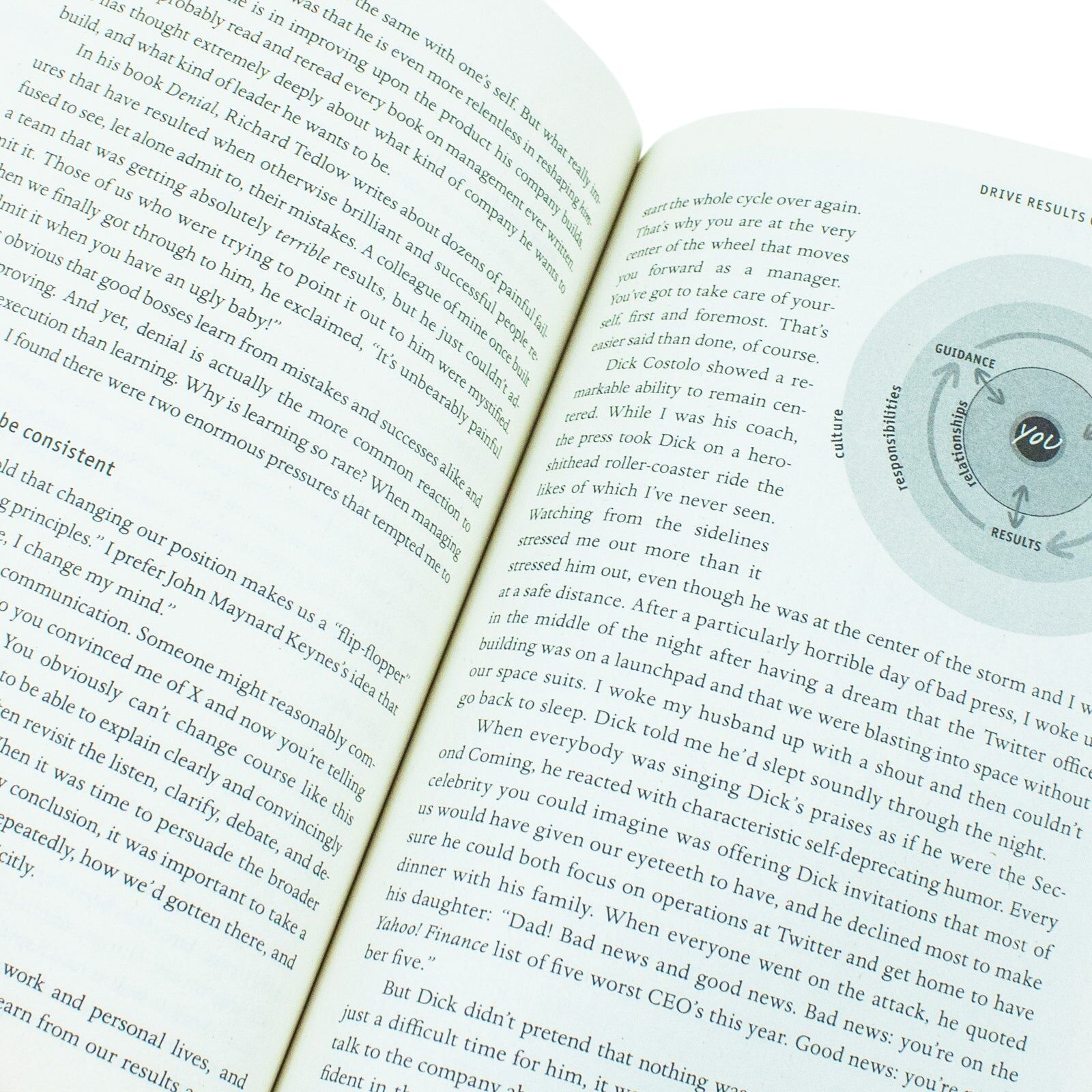
Pan Macmillan Radical Candor by Kim Scott The Bestselling Leadership Book - Management, Feedback & Workplace Culture BookRadical Candor by Kim Scott is a groundbreaking leadership and communication guide that teaches how to give feedback effectively, build trust, and create high-performing teams without becoming harsh—or avoiding difficult conversations. Based on Scott’s experience at Google, Apple and Silicon Valley startups, Radical Candor introduces a simple but powerful framework built on two pillars: Care Personally Challenge Directly The book provides practical tools for giving honest feedback, fostering open communication, strengthening working relationships, and becoming a more compassionate and impactful leader. Perfect for managers, team leaders, HR professionals, and anyone wanting to build a healthy, productive workplace culture. Radical Candor is the perfect handbook for those who are looking to find meaning in their job and create an environment where people love both their work and their colleagues, and are motivated to strive to ever greater success.2,99 £*Shipping: 1,99 £Secure redirect to the provider
-
AUTODESK ROBOT STRUCTURAL ANALYSIS 2025AUTODESK ROBOT STRUCTURAL ANALYSIS LIZENZ Original und garantiert von Nextdigitalkey.com Autodesk Robot Structural Analysis Professional ist eine leistungsstarke FEM-Software (Finite-Elemente-Methode) für die statische und dynamische Analyse von Tragwerken. Sie wird von Statikern und Bauingenieuren weltweit zur präzisen Berechnung und Dimensionierung von Gebäuden und Infrastrukturen eingesetzt. Mit Robot Structural Analysis können Sie: - Statische und dynamische Berechnungen für beliebige Tragwerkstypen durchführen - Stahl-, Beton- und Holzstrukturen nach internationalen Normen (EN, AISC, etc.) bemessen - Nahtlos mit Revit und AutoCAD zusammenarbeiten – dank bidirektionaler BIM-Integration - Erdbeben-, Wind- und Schneelasten nach aktuellen Normen automatisch generieren - Detaillierte Bemessungsberichte und Werkstattzeichnungen exportieren Warum Robot Structural Analysis? Robot bietet eine vollständige Lösung für Tragwerksplanung – von der Modellierung bis zur Norm-konformen Bemessung – und spart durch die enge Revit-Integration erheblich Zeit bei Planungsänderungen. Lizenzinformationen: - Zugang: Vollständig - Sprache: Mehrsprachig - Geräte: 1 - Betriebssystem: Windows - Lizenztyp: Dauerhaft (ohne Ablaufdatum) Was Sie nach dem Kauf erhalten: - Offizieller Produktschlüssel - Downloadlink zur offiziellen Autodesk-Webseite - Installationsanleitung auf Deutsch Download: Der Download erfolgt direkt über die offizielle Autodesk-Webseite. Preis und Legalität: Unsere Lizenzen stammen aus dem Wiederverkauf entbundener Einzelhandelslizenzen gemäß dem Urteil des Europäischen Gerichtshofs (C-128/2011). Alle Lizenzen sind original, digital (ESD), sofort verfügbar und beliebig oft auf demselben Gerät installierbar. Support: Technischer Support rund um die Uhr per Fernzugriff – auch an Wochenenden und Feiertagen verfügbar.69,95 £*Shipping: 0,00 £Secure redirect to the provider
-
What are homologous and analogous structures in plants?
Homologous structures in plants are features that have a similar underlying structure and origin, but may have different functions. For example, the wings of a bird and the arms of a human are homologous structures because they both have a similar bone structure, even though they serve different purposes. In plants, homologous structures can include similar leaf or flower structures that have evolved from a common ancestor. Analogous structures in plants, on the other hand, are features that have a similar function but different underlying structures and origins. For example, the wings of a bird and the wings of a butterfly are analogous structures because they both serve the function of flight, but have different anatomical origins. In plants, analogous structures can include similar leaf shapes or reproductive structures that have evolved independently in different plant lineages to serve similar functions. **
-
What is the difference between equivalent and analogous?
The main difference between equivalent and analogous is that equivalent refers to things that are equal in value, function, or meaning, while analogous refers to things that are similar in some way but not necessarily equal in value or function. For example, two equivalent fractions have the same value, while two analogous situations may share similarities but have different outcomes. In summary, equivalent implies equality, while analogous implies similarity. **
-
Are spines and thorns in biology homologous or analogous?
Spines and thorns in biology are considered analogous structures. This means that they have similar functions (protection) but do not share a common evolutionary origin. Spines can be found in a variety of organisms, such as cacti and porcupines, while thorns are typically found in plants like roses and blackberries. Despite their similar functions, spines and thorns evolved independently in different lineages to serve the purpose of defense. **
-
What is the definition of homologous and analogous organs?
Homologous organs are structures that have a similar origin in different species, suggesting a common evolutionary ancestor. These organs may have different functions in different species but share a common underlying structure. On the other hand, analogous organs are structures that have a similar function in different species but do not share a common evolutionary origin. Analogous organs have evolved independently in different species to serve the same purpose. **
* All prices are inclusive of VAT and, if applicable, plus shipping costs. The offer information is based on the details provided by the respective shop and is updated through automated processes. Real-time updates do not occur, so deviations can occur in individual cases. ** Note: Parts of this content were created by AI.